20250407-Release Notes
- Added 10 advanced features: pixel-to-pixel, video source preview, long-distance transmission, multi-layer, frame frequency, bit depth, USB playback, active shutter 3D, HDR, and remote playback control.
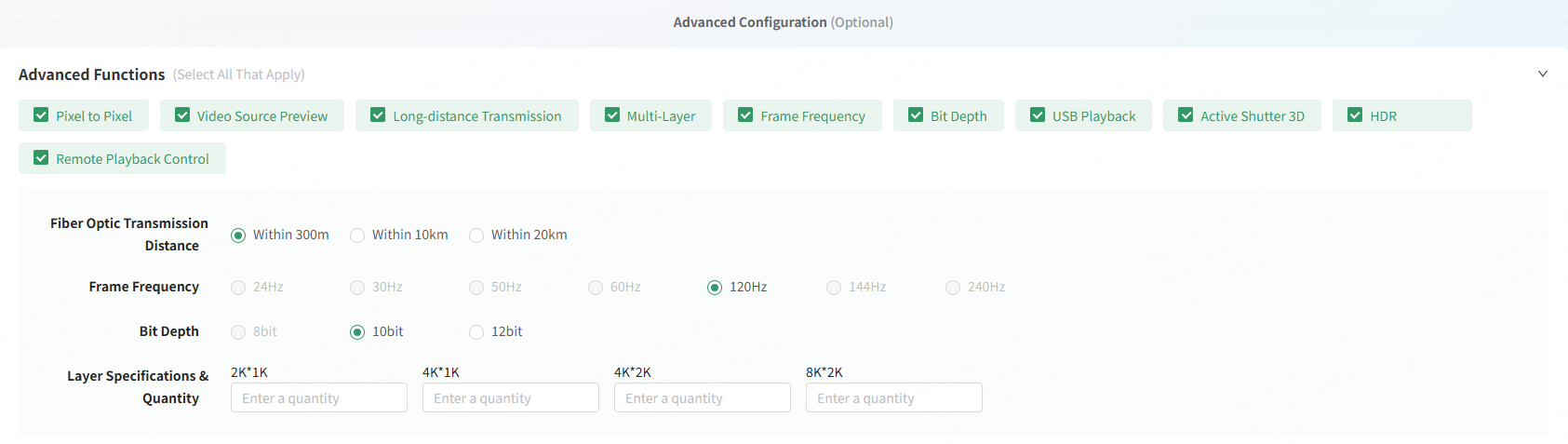
Limitations and notes for the advanced features:
- If the selected unit type is module, the frame rates of 144Hz and 240Hz are not allowed.
- If the receiving cards working with the modules or cabinets do not support HDR, 10bit, or 12bit, these options are disabled.
- If the selected unit type is cabinet, a prompt will appear: "The system's default selected cabinet supports a frame rate of over 120Hz, a bit depth of over 10bit, 3D, and HDR. It is recommended to confirm with the screen manufacturer or NovaStar during actual use.”
- If the screen resolution exceeds 208 million pixels, the following options are disabled: frame rates (120Hz, 144Hz, 240Hz), active shutter 3D, and bit depth (12bit).
- If active shutter 3D is selected, the frame rate defaults to 120Hz, disabling 24Hz, 30Hz, 50Hz, and 60Hz.
- If HDR is selected, the bit depth defaults to 10-bit, disabling 8-bit.
- Enhanced the solution recommendation algorithm.
(1). The computation speed has significantly improved, especially for ultra-high-resolution scenarios: 4K resolution in 3 seconds, 8K in 5 seconds, and 300 million pixels in under 10 seconds (some exceptionally small resolutions may take up to 30 seconds). The computation speed may slightly vary with differing computer configurations.
(2). The receiving card connection method has been optimized, defaulting to the optimal connection method to ensure minimal equipment usage and optimal device recommendations.
(3). The product solution recommendation priority can be flexibly configured.
(4). The recommended solution ranges can be specified according to different load capacity ranges, with both ranges dynamically adjustable.
- Less than 1.3 million pixels:
Supported solutions include IoT playback controllers, video controllers, and LED display controllers.
- 1.3 million to 2.6 million pixels:
Supported solutions include IoT playback controllers, video controllers, COEX, and LED display controllers.
- 2.6 million to 3.9 million pixels:
Supported solutions include IoT playback controllers, video controllers, COEX, and LED display controllers.
- 3.9 million–6.5 million pixels:
Supported solutions include IoT playback controllers, video controllers, COEX, LED display controllers, and H+ all-in-one card.
- 6.5 million to 13 million pixels:
Supported solutions include IoT playback controllers, video controllers, LED display controllers, COEX, H+ all-in-one card, E+ LED display controllers, and H+ LED display controllers (not recommended for a single LED display controller).
- 13 million to 35.38 million pixels:
Supported solutions include video controllers, LED display controllers, COEX, H+ all-in-one card, E+ LED display controllers, and H+ LED display controllers.
- 35.38 million to 141.55 million pixels:
COEX, H+ all-in-one card, E+ LED display controllers, and H+ LED display controllers.
- More than 141.55 million pixels:
H+ all-in-one card (H)
- Improved the interaction of projection solution creation.
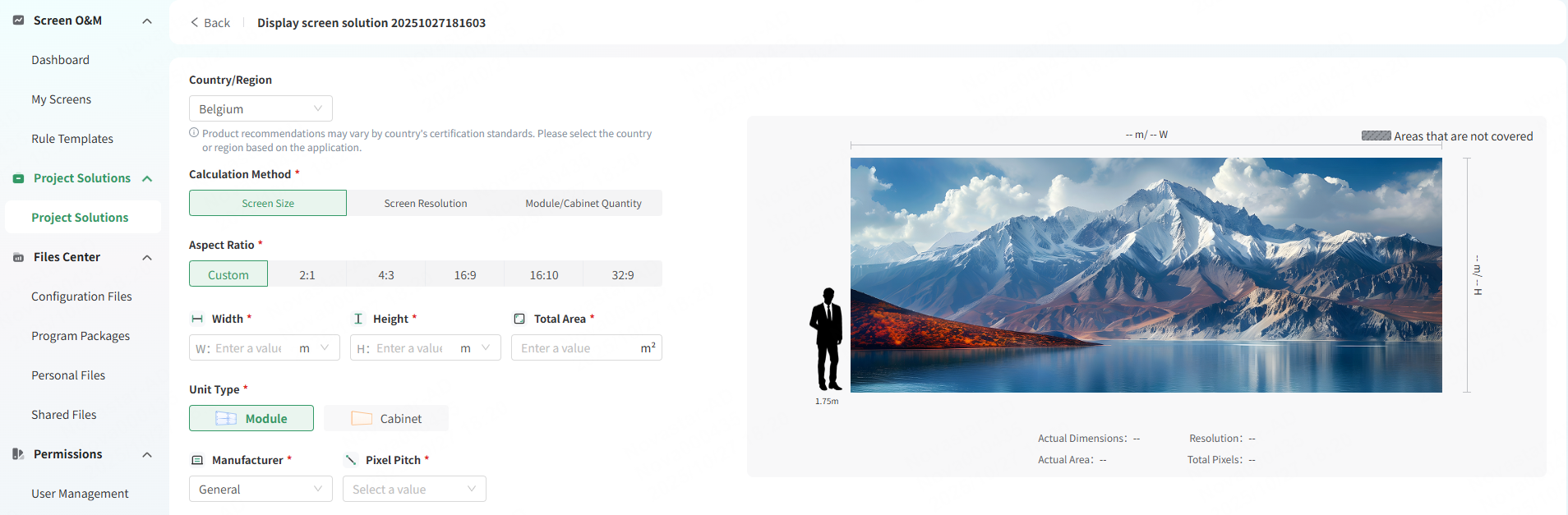
(1) Added real-time preview of the screen layout.
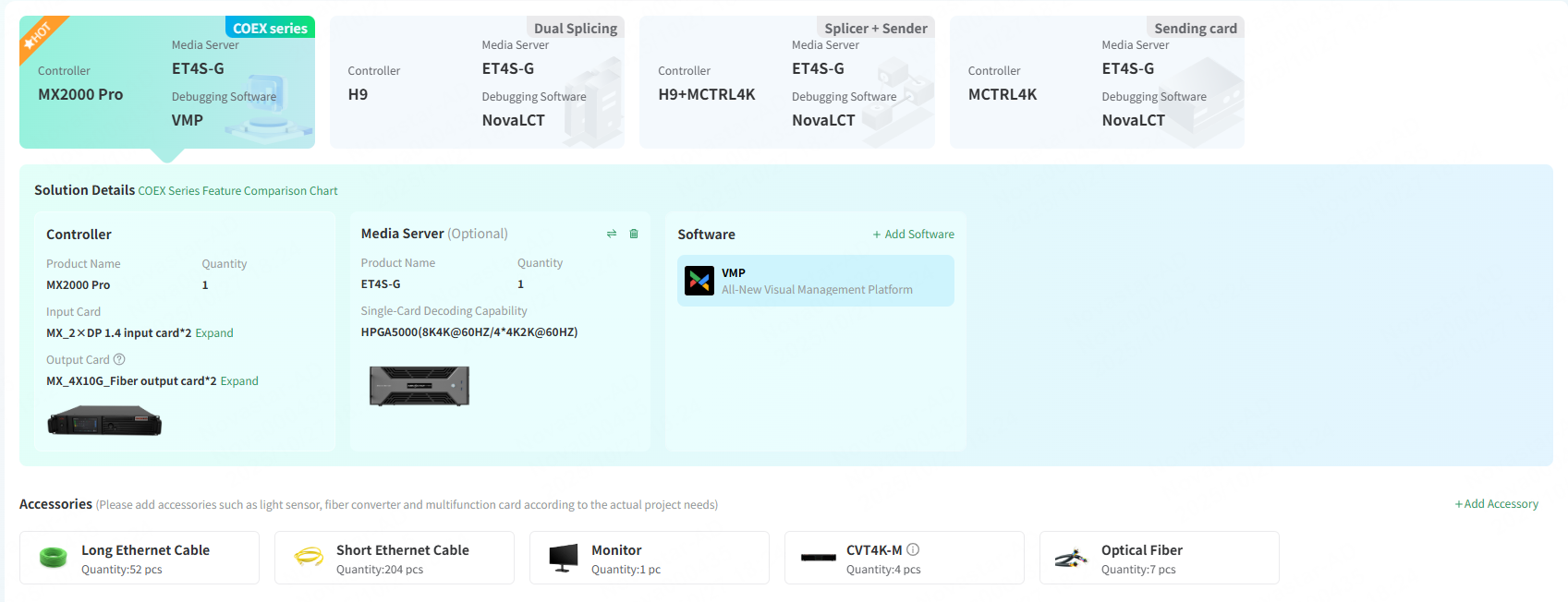
(2) Added feature tags to the solutions for more targeted selection.
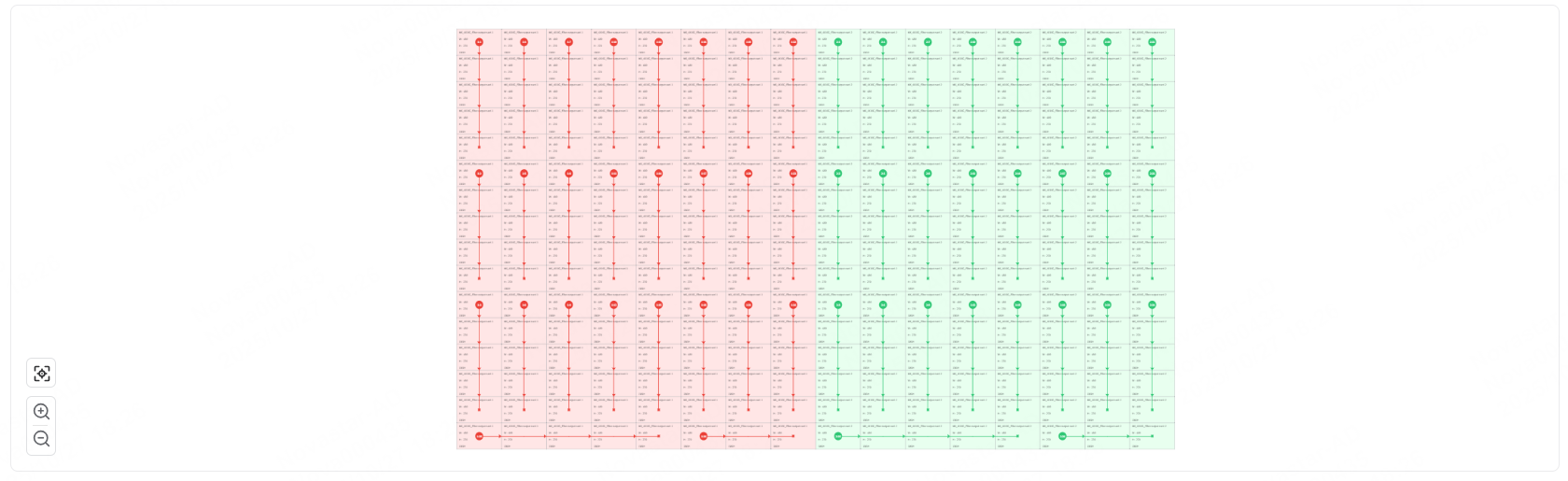
(3) Allows users to download the receiving card connection diagram separately, disables mouse zoom on the connection diagram, and allows zoom adjustments via the buttons at the bottom left.
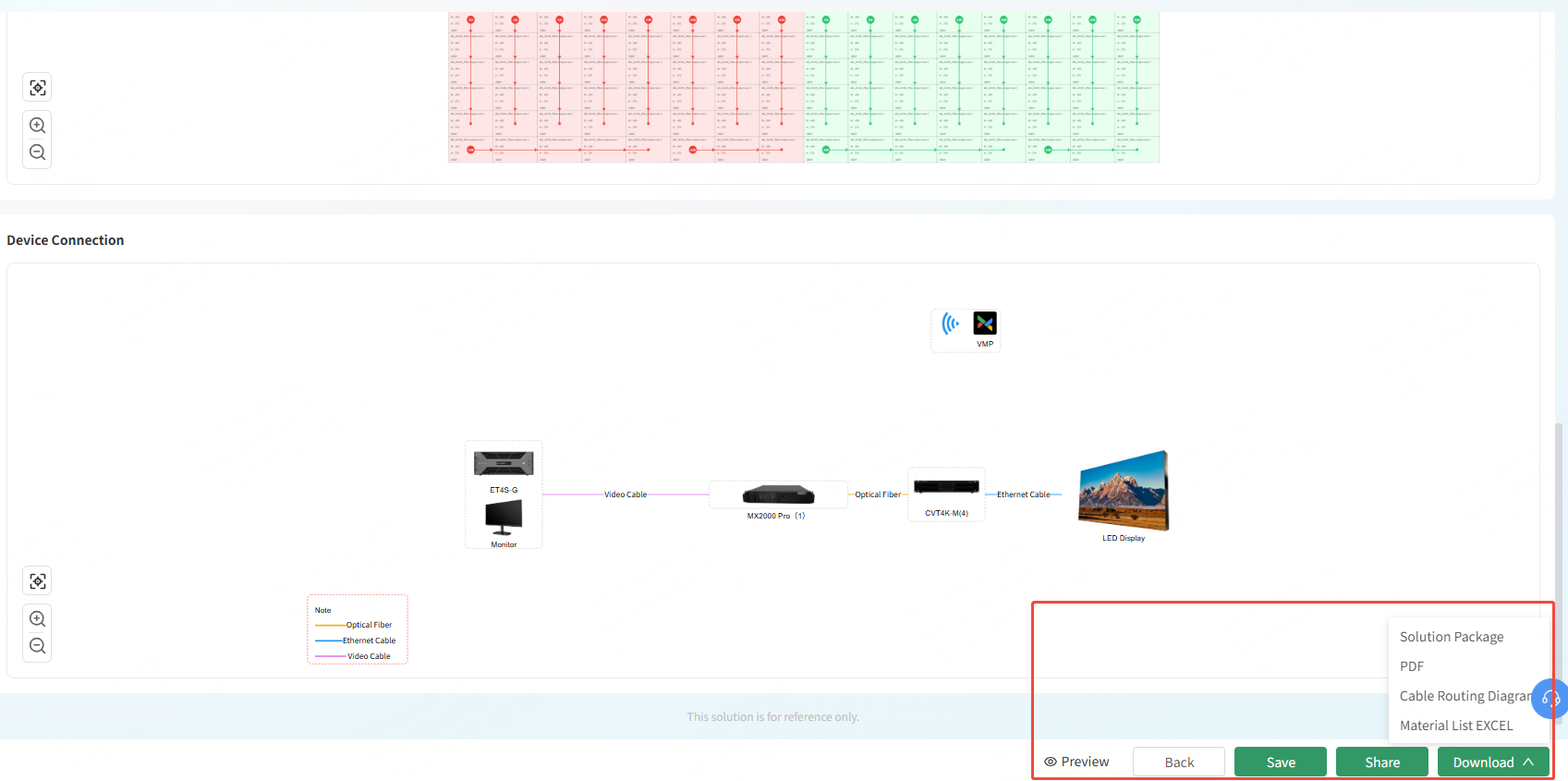
(4)Allows solution preview, share, download, and save to be more convenient, all within a single page.
- Improved the material list.
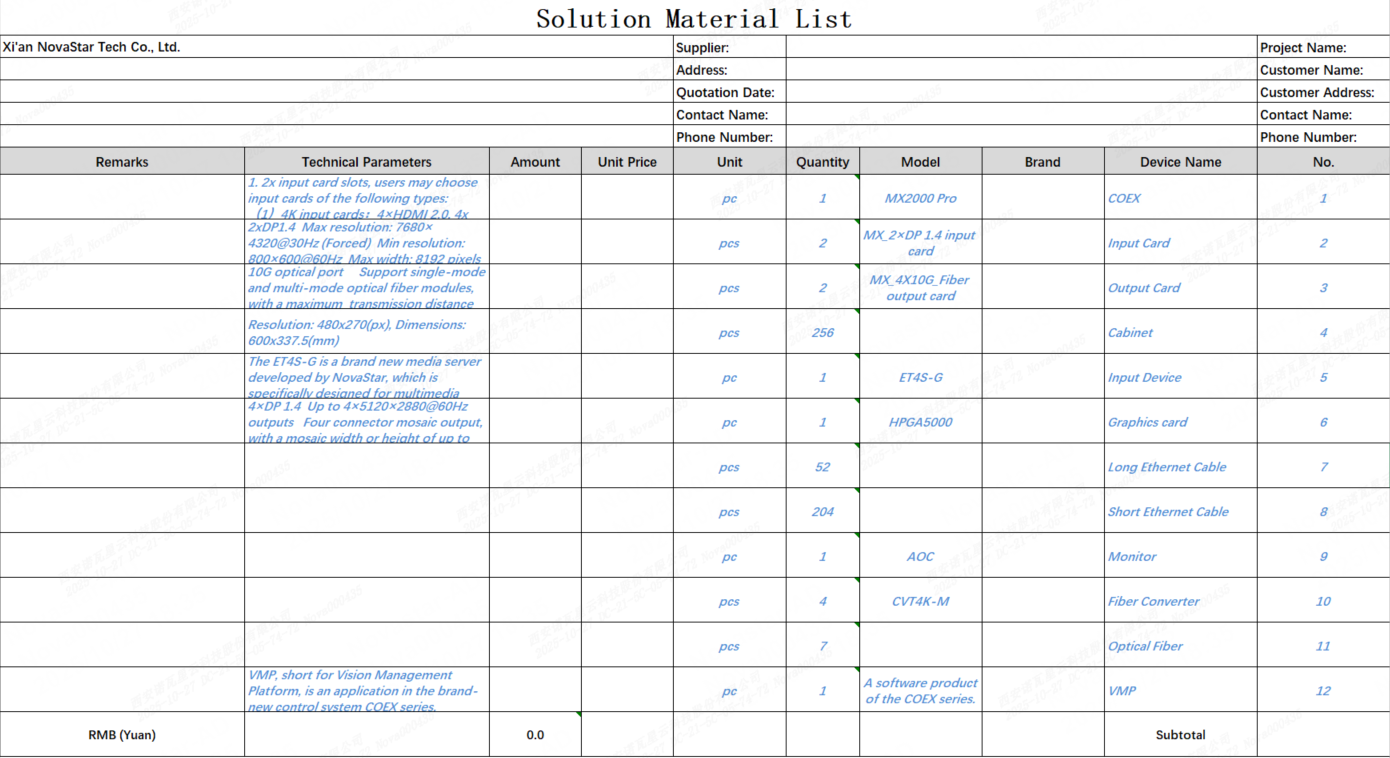
(1). Aligned with the format of the quotation sheet of the company.
(2). Added spare parts information.